
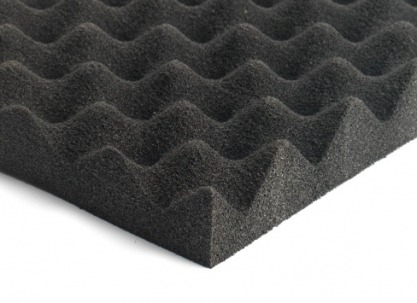
Noise control becomes much more complicated when acoustic treatment has to work around engines, generators, machinery or other heat-producing equipment. In these settings, an acoustic material must do more than absorb unwanted sound. It also needs to fit difficult spaces and provide suitable fire-resistant characteristics.
This is why Impregnated Class 0 Foam is used for a range of specialist acoustic applications. Its flexible open-cell structure can absorb sound while its mineral treatment provides enhanced resistance to burning.
Rather than treating it as simply another acoustic panel, it is better to understand Class 0 foam as a specialist material designed to balance several practical requirements.
Understanding the Role of Class 0 Foam
class 0 Foam is a modified flexible polyurethane foam with an open-cell structure. It is treated using a mineral compound to provide improved fire performance.
The result is a material designed for environments where conventional untreated foam may not provide the desired level of fire resistance.
At the same time, its open-cell construction makes it useful for acoustic absorption. Sound entering the porous material can lose energy within the foam instead of continuing to reflect from hard surfaces.
This combination gives the material a role in applications where noise, space and fire considerations overlap.
Why Noise Control Is Important Around Machinery
Industrial machinery can produce continuous sound from motors, engines, pumps, fans, compressors and moving mechanical components.
Hard metal surfaces can make the problem worse by reflecting sound around an enclosure. Instead of being absorbed, sound repeatedly bounces between surfaces, increasing the overall reverberant environment.
Acoustic foam can help interrupt this process.
When appropriately positioned, Impregnated Class 0 Foam can absorb a portion of the sound energy and reduce reflections. This does not mean that foam alone completely soundproofs a machine or building. Instead, it can form one component of a broader noise-control design.
The Importance of an Open-Cell Structure
The physical structure of acoustic foam plays an important role in its performance.
Open-cell foam contains interconnected spaces through which air and sound energy can move. As sound waves enter the material, energy is dissipated through friction and movement within the structure.
Different foam densities and thicknesses can influence how the material behaves acoustically.
This is why selecting foam simply by appearance is not enough. A material that looks suitable may not provide the acoustic characteristics required for a particular frequency range or application.
For professional projects, factors such as thickness, density, available surface area and installation position should be considered.
Benefits of Impregnated Class 0 Foam
Fire-Resistant Characteristics
The mineral treatment gives the foam enhanced resistance to burning. This can make it useful in environments where fire performance forms part of the material specification.
Acoustic Absorption
The open-cell structure helps absorb sound energy, particularly within the frequency ranges where porous acoustic materials perform effectively.
Flexible Installation
Unlike rigid boards, flexible foam can be cut and formed around curves, corners and complicated shapes.
Non-Fibrous Construction
High-density Class 0 profiles are described as non-fibrous and resistant to erosion or migration caused by air movement, making them useful in applications where material stability matters.
Multiple Product Configurations
The material can be supplied in sheets, rolls, profiles and faced configurations, allowing it to be matched to different installation requirements.
Self-Adhesive Options
Where available, self-adhesive backing can simplify installation and reduce the need for separate bonding materials.
CFC- and HCFC-Free
The supplied product information identifies the foam as free from CFCs and HCFCs.
Applications That Can Benefit From Specialist Foam
The versatility of class 0 Foam means it can be considered for numerous environments.
Generator Canopies
Generators create both mechanical noise and heat. Acoustic treatment inside a suitably designed canopy can help control airborne noise while a fire-resistant foam specification can address an additional material requirement.
Engine Rooms
Engine rooms contain concentrated sources of mechanical sound. Treating appropriate surfaces with acoustic foam can help reduce reflected noise and create a more controlled acoustic environment.
Heavy Vehicles
Vehicle interiors and engine compartments often contain irregular shapes and limited installation space. Flexible foam can be cut to suit these areas.
Marine Equipment
Marine machinery can operate in confined compartments where sound reflections become particularly noticeable. Foil-facing options may also be considered for certain marine or high-temperature installations.
Industrial Equipment
Industrial machinery frequently requires customised acoustic treatment because standard wall panels cannot always be installed around moving or complex equipment.
Using Profiled Foam Instead of Flat Panels
Flat foam sheets are useful where large, relatively simple surfaces need treatment. However, specialist machinery rarely provides such convenient spaces.
Profiled foam can offer a more practical alternative.
The profile can be shaped to fit particular components or spaces while increasing the material’s exposed surface area. This can be valuable when acoustic absorption needs to be maximised within a restricted installation area.
For automotive applications, certain faced profiles may also be used behind cabin trim panels or headliners.
Adding Facing and Barrier Materials
Another advantage of specialist foam systems is the ability to combine acoustic absorption with other materials.
Depending on the application, Class 0 foam may be supplied with facing materials or surface coatings. Composite constructions can also incorporate lead foil, polymeric barriers and damping sheets.
Each material performs a different function.
Foam is primarily associated with sound absorption, whereas barrier materials can contribute to reducing sound transmission. Damping layers can help address vibration-related noise.
Combining these materials can therefore provide a more complete acoustic strategy than relying on a single product.
Is Class 0 Foam the Same as Soundproofing?
This is an important distinction.
Acoustic absorption and soundproofing are not identical.
Absorbing materials reduce reflections and reverberation within an environment. Soundproofing, on the other hand, focuses on limiting the movement of sound from one space to another.
For example, installing acoustic foam on the inside of a machinery enclosure may reduce internal reflections, but additional mass, barriers and structural measures may be needed to prevent noise escaping through the enclosure.
A successful project therefore starts by identifying the actual noise problem before choosing the material.
Practical Installation Advice
Correct installation can have a significant impact on acoustic performance.
The foam should be securely positioned on clean and appropriate surfaces. Where adhesive backing is used, the substrate should be prepared according to the manufacturer’s requirements.
Coverage should also be planned carefully. Leaving large untreated reflective surfaces can limit the overall acoustic benefit.
In machinery applications, the location of the foam is particularly important. Treating surfaces where sound is strongly reflected can provide better results than installing material randomly.
Temperature, moisture, mechanical movement and exposure to other environmental conditions should also be considered before installation.
Maintenance and Long-Term Use
Although acoustic foam is relatively easy to maintain, it should not be exposed unnecessarily to harsh conditions.
Dust can generally be removed using a soft brush or suitable vacuum cleaner. Excessive water and aggressive cleaning chemicals may damage the foam.
If the material is installed in an environment with high humidity, heat or ultraviolet exposure, the product specification should be checked carefully before installation.
Regular visual inspections can also identify physical damage, detachment or deterioration before it affects performance.
Conclusion
Noise control in industrial and transportation environments often requires a combination of acoustic, thermal and fire-related considerations. A material that only absorbs sound may not be appropriate where fire performance is also part of the specification.
Impregnated Class 0 Foam provides a flexible option for applications requiring acoustic absorption alongside enhanced fire-resistant characteristics. It can be supplied in different forms and can be combined with facing, barrier and damping materials for more specialised constructions.
From generator canopies and engine rooms to heavy vehicles, marine equipment and industrial machinery, class 0 Foam can be adapted to a wide variety of demanding environments.
The important point is to match the foam to the actual application. Thickness, density, profile, facing, temperature conditions, fire requirements and the desired acoustic result should all be considered before installation. With the correct specification and placement, specialist foam can become an effective part of a broader noise-control system.