
Calculating percentages for grades is an important skill for students, teachers, and parents. It helps students understand their academic performance and track progress throughout the school year. Many students find grade calculations confusing, but the process becomes very simple once you understand the basic formula and steps involved.
Understanding Grade Percentages
A grade percentage shows how much of the total marks a student has earned. It converts scores into percentages, making it easier to compare results across different subjects or assignments. Schools and colleges commonly use percentages to measure academic achievement.
For example, if a student scores 80 marks out of 100, the percentage is 80%. This means the student earned 80 percent of the total available marks.
Basic Formula for Grade Percentages
The formula for calculating grade percentages is simple:
Percentage = (Obtained Marks ÷ Total Marks) × 100
This formula works for exams, quizzes, assignments, and semester grades. By using this calculation, students can quickly determine their academic standing.
Step-by-Step Example
Let’s understand the process with an easy example.
Suppose a student scores 45 marks out of 60.
Step 1: Divide the Obtained Marks by Total Marks
45 ÷ 60 = 0.75
Step 2: Multiply the Result by 100
0.75 × 100 = 75%
The final percentage is 75%.
This method can be used for all types of grade calculations.
Why Grade Percentages Matter
Grade percentages help students evaluate their strengths and weaknesses. Teachers also use percentages to assign letter grades such as A, B, C, or D. In many schools, percentages are directly connected to GPA and academic rankings.
Some important benefits include:
- Tracking academic progress
- Setting future goals
- Understanding subject performance
- Preparing for final exams
- Calculating semester averages
Calculating Weighted Grades
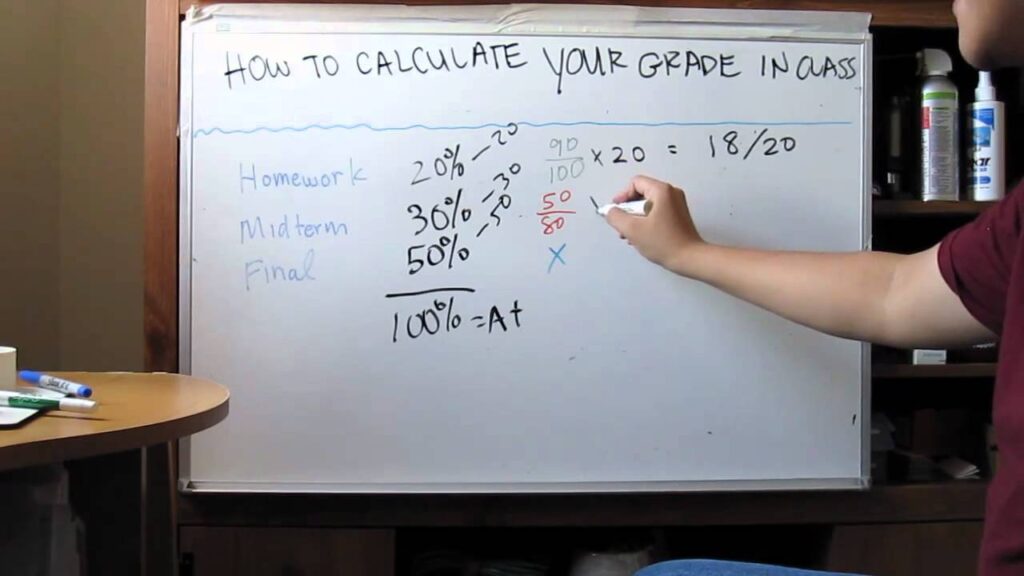
Sometimes, assignments and exams have different importance levels. In this case, weighted grades are used. For example, homework may count for 20% while final exams count for 50%.
To calculate weighted grades:
- Multiply each score by its weight
- Add all weighted scores together
For example:
- Homework: 80% × 20 = 16
- Midterm Exam: 70% × 30 = 21
- Final Exam: 90% × 50 = 45
Total Grade = 16 + 21 + 45 = 82%
The final weighted percentage is 82%.
Using Online Grade Calculators
Today, many students use online grade average calculators to save time and avoid mistakes. These tools automatically calculate percentages, averages, and GPA scores. Students only need to enter their marks and total scores.
Online calculators are useful because they:
- Provide instant results
- Reduce calculation errors
- Save time during exams
- Help track multiple subjects
They are especially helpful for college students managing complex grading systems.
Tips for Better Grade Management
Students can improve their academic performance by regularly calculating grades and monitoring progress. Here are some useful tips:
Keep Track of All Scores
Write down assignment, quiz, and exam marks regularly. This helps avoid confusion later.
Calculate Grades Weekly
Checking percentages every week helps students understand where improvement is needed.
Focus on High-Weight Assignments
Final exams and major projects often carry more marks. Prioritizing these tasks can improve overall percentages.
Use Study Plans
Good time management and study schedules help students maintain strong academic performance.
Common Mistakes to Avoid
Many students make small mistakes while calculating percentages. Here are a few common errors:
- Using incorrect total marks
- Forgetting to multiply by 100
- Mixing weighted and simple percentages
- Entering wrong scores in calculators
Double-checking calculations can prevent these issues.
Conclusion
Learning how to calculate percentages for grades easily is an essential academic skill. Whether you are calculating exam scores, semester results, or weighted grades, the process becomes simple with the right formula and practice. Understanding grade percentages helps students stay motivated and improve their performance over time.
By using basic calculations or online grade calculators, students can easily monitor their academic success and plan for better results in the future.