
Kabaddi fans who enjoy making things by hand often look for ways to bring the court out of the screen and into real space. A simple set of stencils can turn an empty table, wall or notebook into a miniature arena where tactics, positions and favorite moments stay visible long after the match ends. With the right planning, those stencils remain easy to cut, quick to reuse and flexible enough for living rooms, classrooms and clubrooms that already juggle work, study and family routines.
Mapping The Court Before The Match Begins
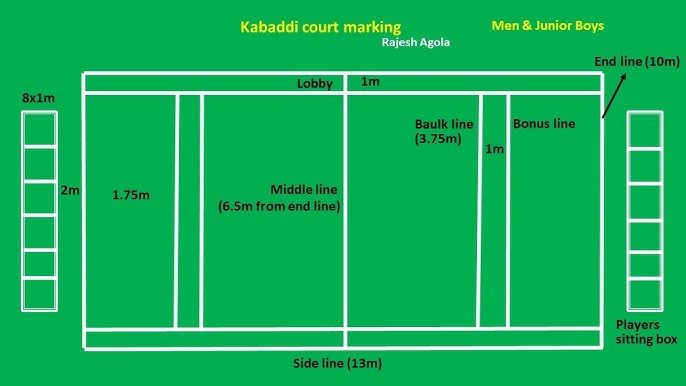
Any stencil project starts with understanding the playing surface. Kabaddi courts are defined by straight lines, mirrored halves and a handful of clearly named zones, which makes them ideal for reduction into clean graphic shapes. Before touching cardboard or plastic, creators sketch a simplified layout on paper – outer boundary, midline, baulk lines and bonus line – while deciding how much detail is actually needed for the intended space. A wall banner can afford broader shapes, while a notebook insert might use a tighter, more compact grid. This first pass keeps the project realistic, because it forces a decision about scale, complexity and where the stencil will actually live.
Once the base layout is clear, many fans prefer to research how different formats handle zones, seasons and scoring patterns, then adjust the design accordingly. They may read more about current competitions, positions and common raid patterns, so the finished stencil reflects how the game is played today rather than relying on outdated assumptions. That extra context helps decide whether to include coaching marks, defensive chains, or only the essential lines. The result is a court template that feels accurate enough for teaching and analysis, yet simple enough for anyone in the room to recognize at a glance.
Turning Raids And Tackles Into Reusable Shapes
With the court grid defined, attention shifts to the people on it. Raiders and defenders need to be represented in a way that survives repeated tracing, painting or sponging. Most makers avoid detailed faces or uniforms and instead lean on expressive silhouettes – a raider leaning forward in mid-lunge, a defender bracing in a low stance, or a compact block of three players holding a line across a zone. These shapes are drawn with an eye toward clean bridges, so no section of the stencil falls out when the inner material is removed.
From Sketch To Cut-Out Template
Moving from sketch to template is where craft discipline matters. Thin but sturdy card, acetate or reusable plastic folders can all serve as bases, provided they lie flat and resist fraying. Outlines are transferred from the sketch using a soft pencil, then refined to remove tiny corners that would be hard to cut cleanly. A sharp hobby knife or precision cutter works best on a protected surface, with slow, deliberate passes rather than heavy pressure. Makers who plan multiple sets often label each piece – “court base,” “single raider,” “corner chain” – so the kit behaves more like a modular toolset than a collection of loose scraps. Over time, that labeled library turns into a reliable resource for banners, posters and training diagrams.
Using Kabaddi Stencils In Classrooms And Clubs
Once a small stencil library exists, its uses expand quickly. Teachers, coaches and club organizers discover that simple shapes carry a lot of explanatory power. Court templates help children remember where raiders must stand at the start of a raid, where defenders tend to stack, and how bonus lines change risk. Silhouette stencils let beginners visualize how a chain tackle might form, or how a solo raid differs from a more cautious approach. Because the shapes are consistent, sessions stay clear even when different adults lead them.
In practice, kabaddi stencils support a wide range of low-cost activities:
- Quick chalk courts drawn on playgrounds or community halls for informal drills.
- Paper playbooks where players map raids and defenses using traced silhouettes.
- Match recaps on poster boards, showing how a key raid unfolded step by step.
- Club noticeboards that highlight player-of-the-week graphics using team-colored silhouettes.
- Community events where visitors decorate tote bags or flags with simple kabaddi icons.
These activities make the sport more approachable for new audiences, because they anchor abstract rules in physical marks that people can touch, trace and take home.
Keeping Craft Sessions Safe, Simple And Sustainable
Any stencil project that involves knives, sprays or paints must respect basic safety. Adults or experienced older students handle cutting, while younger children focus on tracing and coloring.
Sustainability fits naturally into this approach. Off-cuts from packaging, old presentation folders and retired display boards can be cut into fresh templates instead of being discarded.
Why Hand-Made Courts Stay In Memory Longer
Hand-crafted kabaddi visuals occupy a different space in memory than app icons or short clips. Cutting, placing and painting a stencil requires attention, and that attention binds details of the game – where the bonus line sits, how defenders align, what a raid path looks like – to a physical experience. When players or students later watch a live match, the court no longer feels abstract. Lines and movements match shapes they have already traced or painted, so new tactics and combinations become easier to understand.
For families and clubs, these projects also become part of the social fabric. A group banner with shared stencil work can hang in the same room for months, quietly reinforcing the connection to the sport. As schedules fill with study, work and other commitments, that banner remains a reminder that there is a place where people gather, move and celebrate together. In that sense, a simple set of kabaddi stencils does more than decorate a wall – it creates a reusable stage where strategy, movement and community keep meeting, season after season.