
In football betting, odds are more than numbers—they’re the core of every prediction, payout, and decision a bettor makes. Among the many global betting systems, the two most influential formats are European vs Asian odds. Understanding how they differ and when to use each system can dramatically improve accuracy, strategy, and long-term profitability.
European odds are straightforward, showing total payouts in decimal form, while Asian odds incorporate handicaps to balance matches between uneven teams. By mastering both, bettors can interpret betting markets across different regions, compare value more effectively, and minimize risks.
This guide explores their origins, structure, and practical differences while helping you decide which odds format suits your betting approach best.
The Origins and Concepts Behind European and Asian Odds
Football betting has deep cultural and regional roots, which is why different odds systems emerged across continents. European odds, also known as decimal odds, became the global standard as online betting grew in popularity. They were designed for simplicity—anyone could see how much they would win at a glance.
Asian odds, on the other hand, developed primarily through betting markets in Asia. The Asian Handicap system was created to make games more competitive and eliminate the possibility of a draw. It gave underdogs virtual advantages (like +0.5 or +1.0 goals) and applied handicaps to favorites, leveling the playing field.
Understanding these origins is key because they reveal the philosophy behind each system—European odds focus on transparency, while Asian odds focus on fairness and precision. With that historical foundation, we can now look at their structural differences in detail.
The Structure of European Odds (Decimal Format)
European odds use a decimal format that shows the total payout per unit wager, including the original stake. This makes them one of the easiest formats to read, especially for beginners.
For example, if the odds are 2.50, a $10 bet would return $25 in total ($15 profit + $10 stake). The higher the number, the less likely the outcome, and therefore the greater the potential reward.
This system’s popularity lies in its simplicity. It removes the need for complex calculations or fractional comparisons. However, while European odds clearly show potential returns, they don’t incorporate mechanisms to balance mismatched teams—something Asian odds were specifically designed to solve.
How to Read and Calculate European Odds
Reading European odds is simple once you understand the formula:
Profit = (Odds × Stake) – Stake
If a match lists odds of 1.80 for Team A, that means the implied probability of winning is around 55.5%. The formula for implied probability is:
Implied Probability = (1 ÷ Odds) × 100
So, (1 ÷ 1.80) × 100 = 55.5%.
Bookmakers adjust odds like these based on risk and market behavior, ensuring profit through small built-in margins. While this system is easy to use, it’s purely outcome-based. There’s no consideration for partial wins or drawn results—something the Asian odds model addresses directly.
The Structure of Asian Odds (Handicap Format)
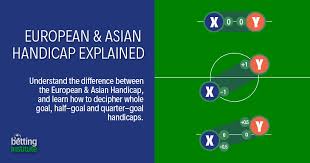
Asian odds introduce a more complex but strategic layer to football betting. Instead of betting purely on who wins or loses, the Asian Handicap format adds a theoretical advantage or disadvantage to teams before the match begins.
For example, if Manchester United is given a -1.0 handicap, they must win by at least two goals for your bet to succeed. If they win by one, your stake is refunded. Conversely, if their opponent has a +1.0 handicap, your bet wins if they draw or win outright.
This structure ensures that bets remain competitive even when teams are mismatched. It also reduces randomness by removing the “draw” as a result—bettors either win, lose, or get their stake back.
Understanding Asian Handicap Lines
Asian Handicap lines often include fractional numbers like +0.25, -0.75, or +1.25. These represent “split handicaps,” meaning your stake is divided between two bets.
For example:
- If you bet on +0.25, half of your stake goes to +0 and the other half to +0.5.
- If the game ends in a draw, you win half and get half your stake refunded.
These lines allow for partial wins and refunds, giving bettors more control and minimizing risk. It’s a more advanced system designed for precision and fairness rather than simplicity. This structural difference is one of the major distinctions between European vs Asian odds, and understanding it leads to deeper insights into how each format impacts betting strategy.
Key Differences Between European and Asian Odds
When comparing European vs Asian odds, the differences lie in structure, purpose, and complexity.
European Odds:
- Expressed in decimal form (e.g., 2.00, 3.50).
- Show total return including the stake.
- Simple and ideal for beginners.
- Focus on straightforward outcomes (win, lose, draw).
Asian Odds:
- Expressed through handicaps (e.g., +0.5, -1.0, +1.25).
- Create balance by giving teams advantages/disadvantages.
- Eliminate draws, allowing partial wins or refunds.
- Require deeper understanding but offer better long-term control.
These distinctions influence how bettors interpret risk and reward. While European odds emphasize payout transparency, Asian odds emphasize strategic balance and fair competition. Understanding both formats allows bettors to adapt across international platforms and develop flexible betting approaches.
Advantages and Disadvantages of Each Odds System
Both systems have strengths and limitations depending on a bettor’s experience and strategy.
Advantages of European Odds:
- Easy to understand and calculate.
- Widely used across Europe and online platforms.
- Perfect for beginners and straightforward markets.
Disadvantages:
- Limited flexibility—bets are all-or-nothing.
- Higher risk of losing full stakes in uneven matches.
Advantages of Asian Odds:
- Offers balanced betting through handicaps.
- Reduces variance by allowing partial wins/refunds.
- Better suited for analytical or experienced bettors.
Disadvantages:
- Requires a deeper understanding of line movements.
- Can be confusing for beginners unfamiliar with handicaps.
Ultimately, the best system depends on a bettor’s confidence and analytical style. Some prefer European odds for clarity, while others favor Asian odds for tactical control.
How to Choose Between European and Asian Odds
The choice between European and Asian odds depends on context.
If you’re new to betting or prefer simplicity, European odds offer transparency and easy calculation. But if you want to refine strategy and reduce volatility, Asian odds provide more nuanced options.
Factors such as the type of match, league competitiveness, and personal risk tolerance all influence which system to use. Experienced bettors often switch between formats based on the situation—Asian odds for close matches, European odds for clear favorites.
The next step after choosing your preferred system is learning how to identify value within each.
Finding Value in European vs Asian Odds
Value betting is the art of spotting opportunities where the bookmaker’s odds underestimate the true probability of an outcome.
For European odds, this means identifying when the decimal value offers a higher return than the real risk suggests. For Asian odds, it’s about finding mispriced handicaps where the advantage doesn’t reflect the teams’ actual performance gap.
For example, if Team A is -0.5 at 2.10 odds, but your analysis suggests they have a 55% win probability (true odds of 1.82), you’ve found a value bet.
Recognizing these discrepancies across formats can lead to consistent long-term gains. Once bettors grasp value betting, they can take advantage of live or dynamic markets.
The Role of Market Dynamics and Live Odds
Both odds systems become more complex in live betting, where numbers shift in real time based on match developments. A red card, early goal, or shift in momentum can dramatically alter odds.
In European markets, the decimal number fluctuates as probability changes. In Asian markets, handicaps may adjust—moving from -0.5 to -0.75, for example—to balance betting activity.
Understanding these market movements helps bettors make informed decisions quickly. It’s also why using reliable, real-time platforms is crucial for maintaining accuracy and confidence.
Choosing a Reliable Platform for Odds Comparison
Accurate odds comparison depends on trustworthy betting platforms that provide transparent pricing, secure payments, and fast updates. A reliable site should display both European and Asian odds formats clearly and allow users to switch between them seamlessly.
For example, ufabet offers both European and Asian odds, real-time updates, and a variety of sports and entertainment options. Its platform combines accessibility with depth, making it ideal for bettors who want a complete, fair, and secure experience.
Selecting such platforms ensures that your betting decisions are based on accurate, up-to-date data—a key factor for long-term success.
Common Misunderstandings About European and Asian Odds
Beginners often misinterpret how these systems work. Some think European odds only show profit rather than total payout, while others assume Asian handicaps are complex when they’re simply designed for fairness.
Another misconception is that Asian odds are riskier because of their fractional lines—when in reality, they often reduce risk by allowing refunds or partial wins.
Clarifying these misunderstandings is vital to avoid errors and improve betting confidence. Understanding the intent and mechanics behind each format prevents costly mistakes and builds a solid foundation for advanced strategies.
Summary and Key Takeaways
Mastering European vs Asian odds is essential for anyone serious about football betting. European odds prioritize simplicity and accessibility, while Asian odds emphasize balance and precision.
By learning both, bettors gain a dual advantage: the clarity of straightforward payouts and the strategic depth of handicaps. Whether you’re a beginner focusing on simple wagers or an experienced bettor chasing calculated value, knowing how each system works allows you to adapt confidently.
Ultimately, understanding odds is the key to turning intuition into strategy. Approach betting with analysis, discipline, and responsibility—and you’ll find that football betting becomes not just about luck, but about knowledge and mastery.